Hank Williams: The Tragic Soul of Country Music
Hank Williams lived like his songs—raw, aching, and unforgettable. His mournful voice and aching lyrics defined country music in the 1940s and early 1950s, speaking for the broken-hearted, the lonely, and the lost. Songs like “I’m So Lonesome I Could Cry” and “Your Cheatin’ Heart” turned personal pain into poetry, striking chords with audiences across America. Yet behind the music was a man unraveling, undone by poverty, addiction, and a body that could not bear the weight of fame. His story is one of meteoric rise and devastating collapse, ending on a snowy New Year’s morning in 1953 when, at just 29 years old, Williams died in the backseat of a Cadillac. His short life became legend, and his legacy remains etched into the very soul of country music.
A Childhood of Hardship
Born Hiram King Williams in 1923 in Mount Olive, Alabama, Hank grew up in poverty. His father, a lumber worker, suffered from illness and spent much of Hank’s early life in a veterans’ hospital. That left his mother, Lillie, to raise the children while running boarding houses. Hank’s childhood was marked by instability and struggle, but he found solace in music. A spinal condition gave him constant pain, yet it also led him to a guitar. By the time he was eight, he was performing on local street corners, collecting coins from passersby who were captivated by his high, mournful voice.
By adolescence, Williams was a familiar presence on Alabama radio, calling himself “The Singing Kid.” His influences ranged from Southern gospel to the blues of African American street musicians, who taught him chord progressions and phrasing that would later shape his signature style.
The Meteoric Rise

In 1946, Williams traveled to Nashville, the heart of country music. His breakthrough came with “Move It On Over,” a rollicking hit that showcased both his humor and his knack for turning everyday struggles into song. A few years later, “Lovesick Blues” propelled him into superstardom, earning him a place on the Grand Ole Opry. With his band, the Drifting Cowboys, Williams became one of the most popular and influential figures in the genre.
Audiences were drawn to his authenticity. Unlike many polished performers of the era, Williams carried himself with an unvarnished honesty. His songs did not merely entertain—they revealed wounds. When he sang, “I’m so lonesome I could cry,” it felt less like performance than confession.
A Life of Struggle
Yet the same qualities that made Williams an icon also made him fragile. He suffered from spina bifida occulta, a painful back condition that drove him to painkillers and alcohol. Fame, rather than healing him, worsened the spiral. By the early 1950s, his erratic behavior cost him dearly. He was dismissed from the Grand Ole Opry in 1952 for drunkenness and unreliability.
But even as his life spun out of control, his pen never stopped producing masterpieces. “Your Cheatin’ Heart,” written during the unraveling of his marriage to Audrey Williams, became one of his most enduring songs. With uncanny irony, his final release during his lifetime was “I’ll Never Get Out of This World Alive.” The title itself seemed like a grim prophecy.
The Tragic Death
On December 31, 1952, Williams hired a young college student to drive him from Montgomery, Alabama, to a New Year’s Day concert in Canton, Ohio. Hank was frail, carrying bottles of alcohol and morphine, his body exhausted. In the early morning hours of January 1, 1953, while the Cadillac glided through the snowy roads of West Virginia, Hank Williams slipped away. When the car finally stopped, the driver discovered him lifeless in the backseat, a blanket over his body. He was just 29 years old.
News of his death spread quickly, stunning fans across the nation. More than 20,000 people attended his funeral in Montgomery. For many, it felt as though country music itself had lost its heartbeat.
A Legacy Beyond Years
Williams’s career lasted less than a decade, yet his output was staggering. He wrote and recorded more than 100 songs, many of which became standards. His style—part honky-tonk, part blues, part gospel—laid the foundation for modern country music. Legends like Johnny Cash, George Jones, and even Elvis Presley cited him as an inspiration. Bob Dylan once said that Williams’s songs were “blood on the tracks before I ever wrote them.”
His voice, nasal yet haunting, carried emotions that transcended generations. In his lyrics, he captured loneliness, betrayal, and longing with a simplicity that made them universal. Every heartbreak had a Hank Williams song to accompany it.
The Myth and the Man
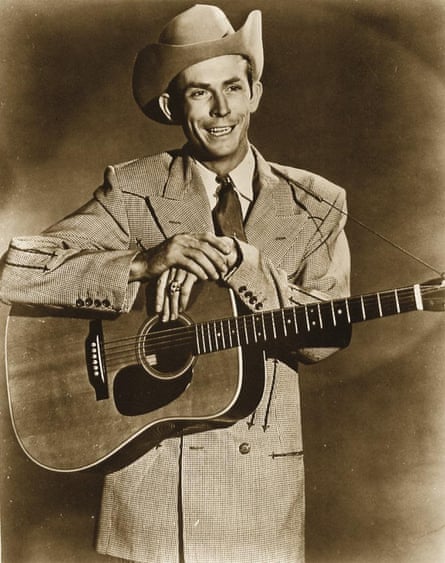
Over time, Hank Williams became mythologized as the archetypal doomed artist—talented, troubled, and gone too soon. His image as a cowboy-clad balladeer, guitar slung across his back, remains iconic. Yet those who knew him recalled a shy, gentle man who loved to laugh, who adored his son Hank Williams Jr., and who, despite his demons, believed in the power of music to heal.
His tragic end only deepened his legend. Songs like “Cold, Cold Heart” and “I Saw the Light” are sung today with the same reverence as hymns. His induction into the Country Music Hall of Fame in 1961, and later into the Rock and Roll Hall of Fame, affirmed his place not just in country, but in American music history.
Eternal Echoes
More than seventy years after his death, Hank Williams’s music continues to echo. His influence can be heard in outlaw country, in folk revival, and in the modern Americana movement. For fans, listening to his records is like touching the soul of a man who bared himself completely in song.
Perhaps that is why his story endures. Williams lived fast, suffered deeply, and died young—but in doing so, he left behind a body of work that continues to speak for the lonely and the broken-hearted. His life may have ended in the backseat of a Cadillac on a snowy New Year’s Day, but his music lives wherever someone feels sorrow, longing, or hope.
Hank Williams did not get out of this world alive, but in his music, he never really left it.