King Charles Firmly Rejects Prince Harry’s “Half-In, Half-Out” Royal Role
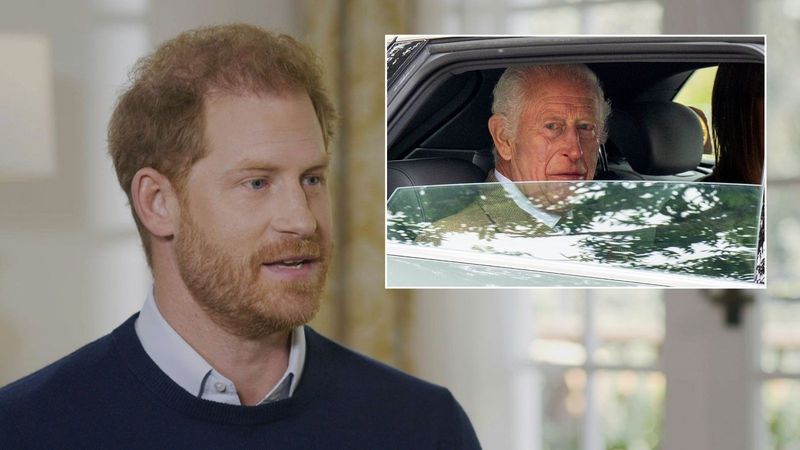
Prince Harry’s relationship with the British monarchy has been a source of global fascination and ongoing tension since he and Meghan Markle stepped back from royal duties in early 2020. Now, following his recent visit to the UK, new reports suggest King Charles III has made it absolutely clear: there will be no “half-in, half-out” arrangement for his youngest son.
According to insiders, Harry raised the possibility of resuming some responsibilities within the royal family while still maintaining his independent life abroad. But the King is said to have rejected the idea outright, echoing the precedent set by his late mother, Queen Elizabeth II, who had previously ruled that such a hybrid model was incompatible with the monarchy’s structure.
The development comes after a rare and closely watched 55-minute private meeting between father and son at Clarence House—the first face-to-face encounter between the two in nearly 19 months.
A Private Meeting With Public Consequences
Harry’s recent return to London was part of a broader trip that included charitable engagements, but it was his reunion with the King that drew the most attention. The pair reportedly met for just under an hour at Clarence House, the King’s London residence, marking a tentative step toward reconciliation after years of strained ties.
Sources say the meeting was cordial but direct, with Harry broaching the idea of rejoining the royal fold in a limited capacity. He allegedly proposed taking on certain royal duties during visits to the UK while retaining his independent life in California.
However, the King is understood to have firmly shut down the suggestion, emphasizing that there can be no blurred lines when it comes to the monarchy. “You are either in, or you are out,” one insider quoted the King as saying, reinforcing the all-or-nothing approach that defined Queen Elizabeth’s stance on Harry and Meghan’s departure in 2020.
The Queen’s Precedent
When Harry and Meghan announced their decision to “step back” from royal life more than four years ago, they initially sought a compromise: the ability to serve the monarchy part-time while pursuing financial independence. At the time, Queen Elizabeth II was adamant that such an arrangement was unworkable.
The late monarch argued that allowing Harry and Meghan to operate as both royals and private figures would create confusion, dilute the Crown’s authority, and set an unmanageable precedent for future generations. Ultimately, her firm stance led to the couple relinquishing their official duties and moving abroad permanently.
King Charles’s reported rejection of Harry’s renewed request signals continuity with his mother’s decision and underscores the monarchy’s commitment to maintaining clear boundaries.
Implications for Harry
For Prince Harry, the decision marks another setback in his complicated relationship with the royal family. Since stepping back, he and Meghan have built a new life in Montecito, California, where they have focused on media ventures, philanthropic work, and raising their two children, Archie and Lilibet.
However, Harry has often spoken about his lingering sense of duty to the UK and his desire to maintain connections with his family. His return visits—usually brief and tied to major events like funerals or coronations—have fueled speculation about whether he might one day resume some form of royal role.
The King’s rejection makes it clear that if Harry wishes to be part of the institution again, it will have to be on full terms, not halfway measures.
Public Reaction
News of the King’s firm stance has sparked mixed reactions among the public and media. Supporters of Harry argue that the monarchy should be more flexible, allowing him to contribute without demanding a full-time return. Critics, however, insist that the rules must apply equally, and that Harry cannot expect privileges after publicly criticizing the institution in interviews, documentaries, and his memoir Spare.
On social media, opinions were sharply divided. “The King is right—Harry made his choice,” one commenter wrote. Another countered, “The monarchy would be stronger with Harry involved. Why not find a way to make it work?”
British tabloids seized on the drama, with headlines such as “Charles Slams the Door on Harry’s Hybrid Dream” and “No Half Measures for the Duke of Sussex.”
The Bigger Picture for the Monarchy
The King’s decision also carries broader significance for the monarchy’s image and stability. By ruling out a hybrid arrangement, Charles is reinforcing the idea that royal service is a full-time commitment, not a flexible lifestyle option.
Royal experts note that the monarchy thrives on clarity and continuity. Allowing a “half-in, half-out” role could weaken the institution’s credibility by blurring the line between public duty and private interest. For Charles, who is navigating both his own reign and ongoing scrutiny of the monarchy’s relevance, maintaining a firm stance may be as much about protecting the Crown as it is about managing family relationships.
Family Dynamics
Despite the King’s rejection of Harry’s proposal, reports suggest that the meeting was not hostile. Sources described it as a “step forward” in their strained relationship, with both sides showing a willingness to at least engage.
Still, unresolved tensions remain—not only between Harry and his father, but also between Harry and his brother, Prince William. The Prince of Wales has been notably less receptive to reconciliation, with insiders suggesting he remains deeply hurt by Harry’s public criticisms.
The King’s decision, therefore, may also reflect his sensitivity to William’s position. As the heir to the throne, William is said to be firmly opposed to the idea of Harry resuming royal duties in any capacity.
Looking Ahead
For now, the likelihood of Harry returning to royal life appears slimmer than ever. With the King standing firm and William reportedly unwilling to compromise, Harry’s role in the monarchy’s future seems confined to that of a distant relative rather than an active participant.
Nonetheless, the 55-minute meeting at Clarence House could signal a thawing of personal tensions, even if institutional disagreements persist. Both father and son are reportedly committed to maintaining some level of contact, which may pave the way for further dialogue in the future.
As one royal commentator put it, “This was never going to be solved in a single meeting. But the fact that they sat down at all, after so much time apart, is a small but important step.”
Conclusion
King Charles III’s firm rejection of Prince Harry’s proposal for a “half-in, half-out” royal role reinforces the monarchy’s long-standing position: royal duty is absolute, not negotiable. By echoing the precedent set by Queen Elizabeth II, the King has drawn a clear line in the sand, even as he cautiously attempts to rebuild a personal relationship with his son.
For Harry, the decision underscores the consequences of stepping away—and the reality that there may be no easy path back. For the monarchy, it is a declaration that in an age of uncertainty, tradition and clarity remain paramount.