Stripped of His WBC Belt, Terence Crawford Accuses Mauricio Sulaiman of Bias and ‘Disrespect’
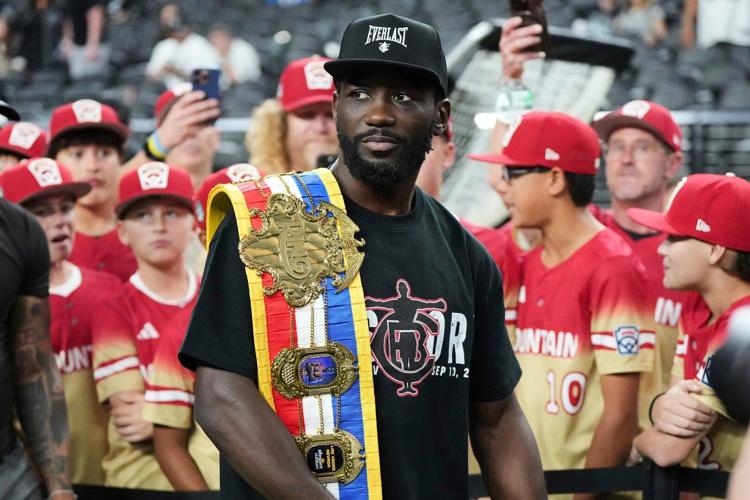
In a dramatic turn that has sent shockwaves throughout the boxing world, pound-for-pound great Terence “Bud” Crawford has been stripped of his WBC super middleweight title—only months after delivering one of the most stunning victories of his career against Saul “Canelo” Álvarez. The decision, announced by WBC President Mauricio Sulaiman, alleges that Crawford failed to pay sanctioning fees for his previous two bouts. But if the sanctioning body expected a quiet compliance from one of the sport’s most decorated champions, they were gravely mistaken.
Crawford’s fiery response, delivered through an unfiltered Instagram video, has now become one of the most discussed outbursts in recent boxing memory. Calling out Sulaiman by name, questioning the legitimacy of the WBC’s demands, and accusing the organization of blatant bias in favor of Canelo Álvarez, Crawford made his stance unmistakably clear: he is not backing down—and he is not paying.
“I saw Mauricio had a lot to say about me not paying him $300,000 plus another $100,000 something for sanctioning fees,” Crawford said in the video. “Then he gonna tell me I ain’t apologize? Who the fk do you think I am? Boy, you better slap yourself. I ain’t paying your ass st.”
The clip, already circulating widely across sports media, highlights a deep and growing tension between top fighters and the sanctioning bodies that govern elite boxing. Sanctioning fees—payments required by federations for fighters to compete for and defend their belts—have long been a controversial topic. Critics argue that the organizations profit off fighters’ risking their lives while providing minimal value beyond recognition and administrative oversight.
Crawford, a three-division undisputed champion, didn’t hold back in calling out what he believes is a systemic issue.
“What makes you so better than any of the other sanctioning bodies? Answer that question,” he demanded. “Everybody accepted what I was giving them, and the WBC think you are better than everybody. You have the green belt, which don’t mean f*ing st.”
His statements struck a chord with fans and analysts who have long questioned the financial ethics of major sanctioning bodies. The WBC, WBA, IBF, and WBO all collect fees from fighters, often amounting to hundreds of thousands per bout—money that fighters say should never exceed the value they risk in the ring.
Crawford went further, framing the situation not just as a dispute about money, but as a matter of respect.
“You want me to pay you more than the other sanctioning bodies because you feel like you’re better than them,” he continued. “You can take the f***ing belt. It’s a trophy anyway.”
It was a statement that stunned many. Coming from a lesser champion, dismissing a world title could be seen as bravado. But coming from Crawford—a fighter already widely considered one of the greatest of his era—it sounded more like a declaration: his legacy does not depend on any federation’s validation.
Indeed, Crawford emphasized that the true cost lies with the fighters themselves.
“What am I paying you every time I step foot in the ring? I’m the motherf***er putting my life on the line, not you. You should be paying me.”
His criticism also extended to the lavish lifestyle he claims sanctioning officials enjoy at fighters’ expense. “This dude gets on a plane, gets a hotel suite. Him and his buddies, they go out for five-star meals and all that. Guess who got to pay for it? Us fighters.”
But perhaps the most incendiary part of Crawford’s video was his accusation of favoritism toward Canelo Álvarez, the Mexican superstar he defeated in a monumental upset.
“Mauricio, everybody in the world know you was going for Canelo. You was mad that I beat Canelo. It’s okay. It happens,” Crawford said. “Say congratulations instead of having that little smirk on your face, all mad and pouting.”
The implication was unmistakable: Crawford believes the WBC has been looking for an opportunity to remove him as its champion ever since he defeated the organization’s premier cash cow.
Although Sulaiman has not yet responded in detail, the WBC maintains that the stripping was purely administrative, not personal. In its announcement, the federation stated that sanctioning fees are mandatory and that the rules must be applied equally to all fighters. Still, Crawford’s accusations have ignited a broader debate about transparency and power in boxing governance.
For boxing commentators, Crawford’s latest conflict with a sanctioning body is not surprising. The Nebraska native, known for his quiet demeanor outside the ring and ferocious dominance inside it, has had a historically rocky relationship with the politics of boxing. Despite being undefeated and capturing undisputed titles in multiple weight classes, he has often been overlooked, undermarketed, or forced to wait for career-defining opportunities.
His victory over Álvarez was supposed to silence critics and cement his place in boxing history. Instead, it appears to have opened a new chapter of conflict.
As of now, Crawford remains the unified champion in the eyes of many fans regardless of the WBC’s decision. And he made one thing clear: the loss of one belt does not define him.
“I been stripped before, it doesn’t matter,” he said. “I’m still considered the undisputed champion.”
Whether the WBC will reconsider its stance—or whether Crawford will escalate the dispute—remains to be seen. But one thing is certain: the boxing world is now watching closely.
Terence Crawford may have lost a belt, but he has gained something else—a louder voice, a more visible platform, and a growing wave of public support. And if history is any indication, he is far from finished.