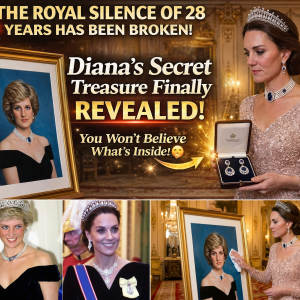
Kate’s Access to Diana’s Engagement Ring and Iconic Royal Jewels Highlights Painful Contrast with Meghan’s Limited Privileges

Jewels have long served as symbols of continuity and tradition within the British monarchy. From engagement rings steeped in history to tiaras passed down through generations, these glittering treasures carry not only beauty but also meaning. In recent years, however, the distribution and visibility of such heirlooms has drawn attention — particularly the striking difference between the access granted to Catherine, Princess of Wales, and Meghan, Duchess of Sussex.
Observers point to Princess Kate’s privileged access to royal jewels, from the sapphire engagement ring once worn by Princess Diana to tiaras and necklaces belonging to Queen Elizabeth II. Meghan, by contrast, has rarely been seen wearing pieces of similar prominence. For some, the disparity underscores a deeper truth about the dynamics of rank, trust, and privilege within the Royal Family.
Diana’s Ring: A Symbol of Legacy
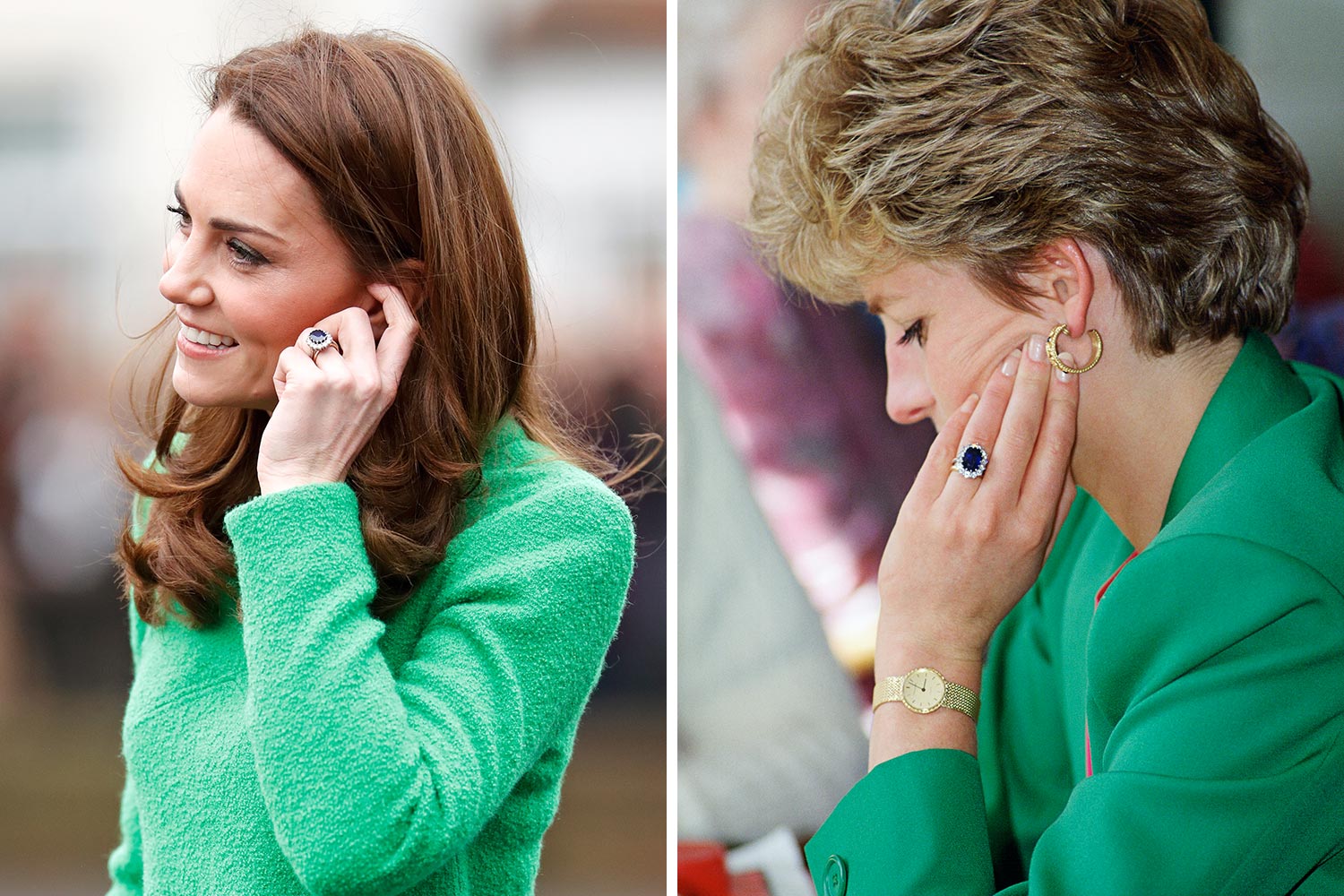
At the center of this discussion is Diana’s engagement ring, perhaps the most famous royal jewel of modern times. Designed by Garrard in 1981, the ring features a 12-carat oval Ceylon sapphire surrounded by 14 diamonds, set in white gold. Princess Diana wore it throughout her marriage, making it instantly recognizable around the world.
When Prince William proposed to Kate Middleton in 2010, he presented her with the ring. He explained that doing so ensured his late mother was part of the moment. The choice resonated deeply with the public, cementing Kate’s symbolic role as Diana’s successor within the royal narrative.
For Meghan, who married Prince Harry in 2018, no comparable jewel was bestowed. Harry designed her engagement ring with diamonds from his mother’s collection, but Diana’s most iconic piece had already been passed to Kate. While understandable, the symbolic contrast between the sisters-in-law was striking.
Access to the Royal Vault
Beyond the engagement ring, Kate has consistently been loaned some of the most treasured items from the royal collection. She has worn the Lover’s Knot tiara, once a favorite of Diana, as well as pearls, brooches, and earrings formerly belonging to Queen Elizabeth II. At state banquets and coronations, Kate has often been photographed adorned in pieces that connect her directly to the legacy of monarchs past.
Meghan’s jewelry choices, by contrast, have been more limited. While she has occasionally worn smaller items with royal provenance, she has not been granted regular access to tiaras or historic jewels. At her wedding, she wore Queen Mary’s bandeau tiara — a beautiful but relatively understated piece compared to the tiaras frequently lent to Kate. Reports at the time suggested that her choice of tiara was restricted, with Harry later expressing frustration that Meghan had less freedom than they had hoped.
A Matter of Rank and Role
Royal experts emphasize that access to jewels is not only a matter of personal preference but also of rank. As the wife of the heir to the throne, Kate is directly positioned to become queen consort. Her role demands that she represent continuity and stability, which includes the symbolic wearing of historic jewels.
Meghan, on the other hand, was never expected to take on such a central constitutional role. Her position as the wife of the “spare,” Prince Harry, meant her access to heirlooms was always going to be more limited. Since the couple stepped back from royal duties in 2020 and relocated to California, their distance from the institution has further curtailed any opportunities for Meghan to wear jewels from the royal vault.
Still, the optics are stark. The image of Kate in Diana’s tiara or Elizabeth II’s pearls stands in contrast to Meghan’s reliance on her own collection or more contemporary pieces.
Public Perception and Commentary
Commentators note that jewelry, though material, carries symbolic weight. “When Kate wears Diana’s ring or Elizabeth’s pearls, it’s not just adornment—it’s inheritance,” said royal historian Sarah Gristwood. “It shows the monarchy’s confidence in her role. Meghan’s lack of access tells its own story.”
Some media outlets have described the contrast as highlighting “a painful reality”: that Meghan has not been embraced with the same level of institutional trust or symbolic inclusion. Supporters of Meghan argue that the restrictions reflect deeper tensions, while others see them as a natural consequence of hierarchy.
On social media, debates continue. Admirers of Kate praise her elegance and the way she honors tradition through jewelry. Fans of Meghan counter that the Duchess of Sussex was sidelined, not only from jewels but from the broader narrative of the monarchy, fueling her and Harry’s eventual departure.
The Role of Pearls, Tiaras, and Brooches
Royal jewelry is more than decoration; it is a form of language. Pearls often signal mourning or dignity, tiaras represent continuity, and brooches carry personal symbolism. When Queen Elizabeth II lent jewels, the act itself was meaningful. Kate’s regular use of such pieces demonstrates her closeness to the monarch’s memory.
Meghan’s absence from this symbolic conversation contributes to her perception as an outsider. Even at key events, such as Trooping the Colour, she was rarely photographed in heirlooms of significance. Instead, her jewelry choices leaned toward modern designers, underscoring her difference but also her independence.
A Divide with Lasting Impact
The contrast between Kate and Meghan in terms of jewelry access encapsulates broader differences in their royal journeys. Kate’s path has been defined by gradual preparation for queenship, supported by the visual continuity of jewels passed down through generations. Meghan’s has been marked by independence, distance, and at times exclusion, whether by circumstance or by choice.
The narrative of jewels thus mirrors the wider story of two women whose experiences within the same family have diverged dramatically. While Kate represents stability and inheritance, Meghan embodies disruption and change.
Conclusion
Jewelry may seem like a superficial subject, but in the context of royalty, it is deeply symbolic. Kate’s access to Diana’s engagement ring, tiaras, and jewels from Queen Elizabeth II reflects her central role in the monarchy’s future. Meghan’s more limited access highlights the boundaries of her position—and, to many, the painful reality of her differing treatment.
Ultimately, the jewels are not just about diamonds and pearls. They are about belonging, legacy, and the narratives the monarchy chooses to project. And in that glittering contrast between Kate and Meghan, one sees not only two women with different wardrobes but two distinct visions of what it means to be royal.