Salma Hayek Reveals How Harvey Weinstein Tried to Kill Frida—and How She Turned His Abuse Into an Oscar-Nominated Triumph
A Dream Nearly Destroyed
When Salma Hayek first began her quest to bring the story of Mexican artist Frida Kahlo to the big screen, she knew it would not be easy. Hollywood was still a place where Latina actresses were rarely offered leading roles, much less entrusted to carry a film centered on a Mexican icon. But Hayek’s determination was unshakable. She spent years lobbying for the project, assembling a team of collaborators, and convincing skeptical studios that Kahlo’s extraordinary life deserved to be told.
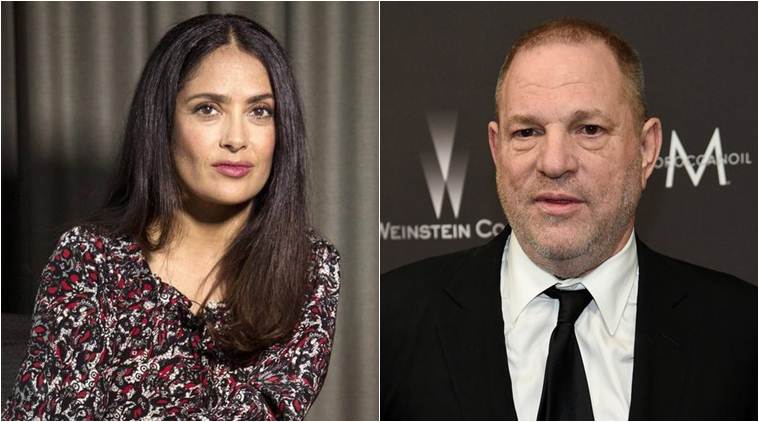
What she didn’t anticipate was that her greatest obstacle would not be the film industry’s lack of faith in her vision, but the powerful producer behind the project: Harvey Weinstein. In later interviews and essays, Hayek revealed the extent of Weinstein’s harassment, manipulation, and threats during the making of Frida. According to her, he attempted to weaponize his influence to force her into compromising positions—going so far as to threaten to “kill the movie” if she didn’t comply.
Weinstein’s Intimidation Tactics
Hayek described a harrowing environment on set where Weinstein allegedly demanded unnecessary nude scenes, pressured her into sexual favors, and berated her in front of colleagues. At one point, he told her outright, “I will kill your movie.” The psychological toll was devastating. Hayek confessed she suffered from panic attacks throughout production and even collapsed before filming the intimate love scene between Kahlo and Leon Trotsky, played by Geoffrey Rush.
What made the situation more painful was the emotional investment she had already poured into the project. Frida wasn’t just another movie for Hayek—it was a passion project, a tribute to a woman who embodied resilience and defiance. To see Weinstein use that devotion as leverage against her added an extra layer of cruelty.
Turning Pain Into Power
Despite the relentless pressure, Hayek refused to abandon the film. Instead, she chose to channel her fear and humiliation into her performance. On screen, her portrayal of Frida Kahlo captured the painter’s vulnerability and strength with astonishing depth. It was a performance born out of struggle—raw, imperfect, and deeply human.
The result was remarkable. Frida premiered to critical acclaim, earning six Academy Award nominations, including Best Actress for Hayek. She became the first Mexican actress in decades to receive such recognition, cementing her place in Hollywood history. Ironically, the very obstacles Weinstein tried to place in her path only amplified her artistry, giving her performance an authenticity that audiences and critics could not ignore.
Beyond Frida: A Career of Breaking Barriers
Hayek’s battle during Frida was not her only confrontation with Hollywood’s biases. Earlier in her career, she was repeatedly told that her accent was “too thick,” her ethnicity “too distracting,” and her image too foreign for mainstream leading roles. She was offered typecast parts—maids, mistresses, exotic side characters—when she was aiming for roles that reflected her talent and range.
She once described the constant rejection as a reminder that she didn’t belong. But rather than accept the system’s limitations, she carved out her own space. By producing her own projects, she created opportunities where none had existed, forcing Hollywood to reckon with the demand for diverse voices and stories.
A Glass Ceiling Shattered
The irony of Salma Hayek’s career is that her success was not built on the glossy Cinderella narrative that Hollywood loves to promote, but on surviving its ugliest truths. While others were handed opportunities, she clawed her way through obstacles that were both systemic and deeply personal.
Today, she is not just an actress but also a producer, activist, and businesswoman. She stands among the few Latina women in Hollywood with the power to greenlight projects, using her influence to uplift stories and voices that were once dismissed.
Her resilience also serves as a reminder of what countless women in the industry endured in silence. By sharing her story about Weinstein, Hayek contributed to the broader reckoning of the #MeToo movement, proving that even the most powerful men could not permanently silence those determined to speak.
A Legacy of Strength
Looking back, Hayek has often said that Frida was one of the hardest films she ever made, but also the one that defined her. Every scene, every brushstroke on screen, carried the weight of her personal battle. The authenticity of Kahlo’s pain and defiance came not from imagination but from lived experience.
Her story has since become a beacon of inspiration—not just for aspiring actors but for anyone who has faced intimidation, discrimination, or the threat of erasure. Hayek’s triumph is a testament to the power of resilience, reminding us that even in moments of despair, strength can emerge in unexpected ways.
Hollywood’s Changing Landscape
In the years since Frida, Hollywood has undergone a seismic shift. The exposure of Weinstein’s abuses opened the floodgates for countless others to share their stories, challenging the culture of silence that had protected predators for decades. While progress has been uneven, the conversation about equity, representation, and accountability is louder than ever.
Hayek’s story sits at the center of this change. Not only did she survive Weinstein’s intimidation, but she thrived in spite of it. And in doing so, she helped pave the way for future generations of women, particularly women of color, to claim their space in Hollywood without apology.
Conclusion: From Survivor to Pioneer
Salma Hayek’s journey with Frida is not just the story of a film; it is the story of a woman who refused to be erased. Weinstein’s threats could have ended her dream, but instead, they fueled a performance that earned her global recognition and redefined what was possible for Latina actresses in Hollywood.
Her career since then has been marked by the same spirit of defiance and perseverance. Whether on the screen, behind the camera, or in the boardroom, Hayek has proven that resilience can outshine oppression.
In the end, the scandal that once threatened to destroy her became proof of her power. Salma Hayek didn’t just make a movie—she made history.